Plate 001 Sedges
Green Kyllinga
Kyllinga brevifolia
Also called kyllinga, perennial kyllinga, shortleaf spikesedge
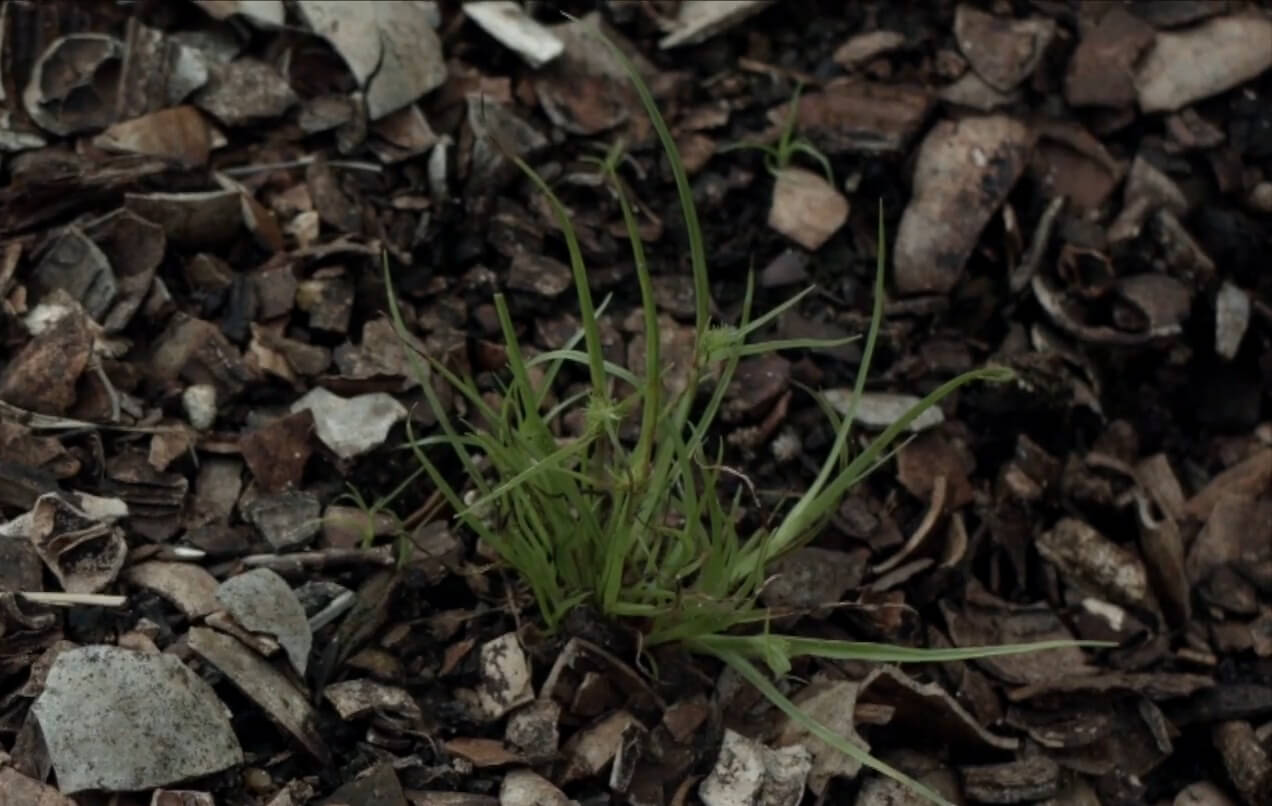
Green kyllinga is a low, fine-leaved sedge that forms dense, bright green mats in moist lawns, especially in the Southeast and California. It spreads by underground stems and can take over overwatered spots quickly.
It is shorter and finer than nutsedge but just as stubborn.
How to identify it
Check these 4 things
- Leaves
- Narrow, glossy, bright green leaves on a triangular stem.
- Flowers and stems
- A single round, green seed head at the top of each stem, with small leaf-like bracts below it.
- Roots
- Purplish rhizomes that form a dense mat. No tubers.
- Seeds
- Small seeds in the round seed head.
Look-alikes
How it spreads
By rhizomes and by seed.
When it shows up
- January: quiet
- February: quiet
- March: quiet
- April: sprouts
- May: sprouts
- June: sprouts, flowers
- July: flowers
- August: flowers
- September: flowers
- October: quiet
- November: quiet
- December: quiet
How to get rid of it
By hand
Dig out small patches with the rhizomes. Pieces left behind will regrow.
Organic
Water less often and improve drainage. Kyllinga thrives in wet, overwatered lawns.
Herbicide
Use a sedge herbicide (such as halosulfuron or sulfentrazone). Follow the label.
Toxic or edible
If you are not sure what a plant is, do not eat it or let pets chew it.